The Remarkable Journey of Basil Robinson Westley: The Man Who Was There.
Foreword: Being There.
Placing the hero of a fictional story into the heart of non-fictional events is a device often used in books and movies. In fact I’ve done it myself in my own novels. Quite often those non-fictional events are consequential, even history defining. On the one hand this can give the viewer or reader a more immediate sense of time and place. It may also enable them to relate the story to personal or familial experiences. The flip side is that this also serves to the blur the line between fact, fiction and myth, especially where those non-fictional events are portrayed as seemingly revolving around the central character of the story, as if he or she is either the progenitor of those events, or an irresistible force attracting them in some way. In such cases we’re not always sure what is true and what isn’t. My favourite instance of this is Arthur Penn’s movie ‘Little Big Man (1970)’, but Robert Zemeckis’s ‘Forrest Gump (1994)’ might be a more recent, if less perfect, example. There’s a whole genre of time travelling stories that latch onto the same idea.
Fiction is one thing, but what if there were individuals who found themselves, at various points in their lives, to be unwilling (and maybe occasionally willing) participants in multiple events that shook the world? If so, then step-forward Basil Robinson Westley…
Before we embark on the odyssey that is Basil’s life, I must declare up front the fact that I share kinship with him. Basil’s father, Henry Robinson Westley, was the brother of my Great Great Grandfather, making Basil my first cousin three times removed. However, I offer no bias here. By any standard… from his childhood on the front line of the British Empire, to designing the lace that hung at the windows of the Victorian world, to his ‘hands-on’ ringside seat at the dawn of manned flight, right through to him being in the firing line as a civilian in both world wars…and much more besides… Basil’s journey was a remarkable one.
What follows below is Basil’s story, largely drawn from his own memoir1, which was written just as the sun was setting on a long and amazing life. I do hope I do it justice.
A Boy and Empire.
Basil Robinson Westley was born at Weedon Barracks, Weedon Bec, Northamptonshire on Monday 20th January 1868. Basil believed that the regimental birth records had been destroyed, but they did survive, and they also record that his baptism took place on 9th February at the Garrison Chapel of St. Mark’s Church in Daventry.
Basil was the third child born to Colour Sergeant Henry Robinson Westley, who wore the dark green uniform of the 4th Rifle Brigade, and his wife Mary née Feeley. Their second son, named after his father, had died five months prior to Basil’s birth, during the regiment’s brief sojourn in Montreal, Canada2. The eldest brother, Mark Harry, had been born in Gibraltar in 18643. A half-brother, Joseph Killackey Westley4, the offspring of Mary’s first marriage to a Sergeant in the 31st Regiment, was sixteen years old at the time of Basil’s birth.
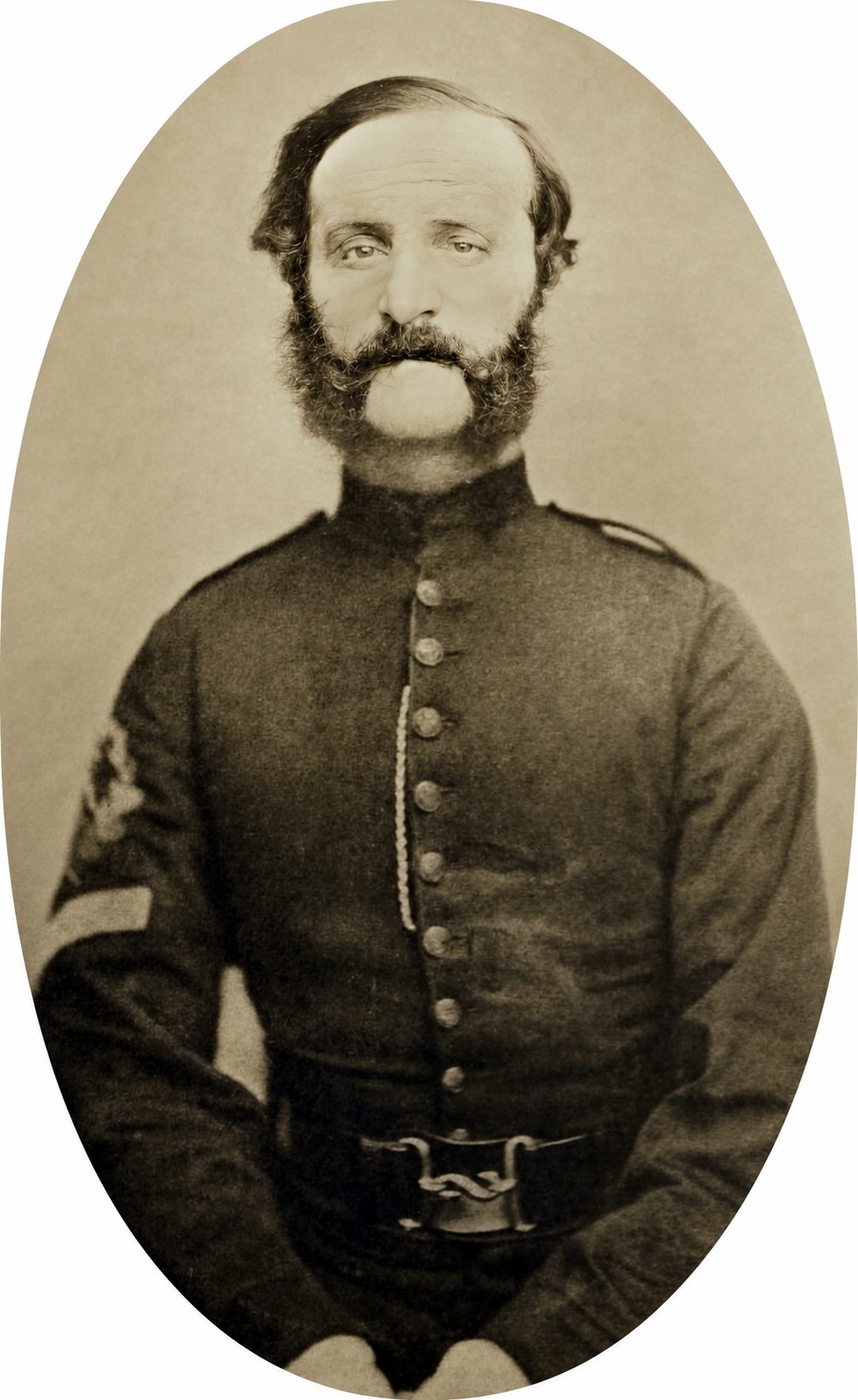
Born in Nottingham in 1835, Henry (left) had been a ‘box-maker’ prior to joining the colours; he had signed on with the Rifle Brigade (1st Battalion) in 1855, transferring to the 4th Battalion two years later. He was promoted in quick succession to Corporal, Sergeant and then Colour Sergeant. By the time of Basil’s birth – aside from his stations in the UK – Henry had seen service in Malta, Gibraltar (where he also married Mary in 1863) and Canada. Mary, a Catholic, had been born around 1832 and was a native of County Sligo, Ireland.
Basil was born into the period of British history sometimes known as Pax Brittanica, when the Empire was very much expanding and on the way to becoming a global superpower. At this time relations with other major countries and Empires were generally on a peaceful footing. As the British Empire had grown, however, from gradual colonization in the sixteenth century through the establishment of lucrative trade routes… then, exponentially, so had its military power. Through the Empire, Britain now had a global reach. As more territory was occupied, the more demands were placed upon the civil service … and the army… to administer it and defend it. The more it occupied overseas territory, the likelihood of local conflicts increased too.
Basil’s birthyear, 1868, marked twelve years since the end of the Crimean War. Whilst nothing of that significance had taken place since, the Indian ‘mutiny’ in 1857 and the repelling of Fenian raiders in Canada in 1867 (during which Henry saw active service) served as reminders that the army may be called upon at any time. Indeed British swords being drawn against the Ashanti on the Gold Coast in Africa5, and in skirmishing with the indigenous populations of India and Afghanistan, were something of a regular occurrence. As a result the army was shuffled, packaged up, and sent off around the world to protect the political and commercial interests of the Empire… and the Westley family were small cogs in that vast, well-oiled machine.
After Weedon, the family moved with the regiment to various barracks around the south of England, including Huts Brompton, Chatham (where a daughter – Mary Alice – was born in 18726). They then spent a year garrisoned in Dublin, after which Henry was promoted to Sergeant Major.
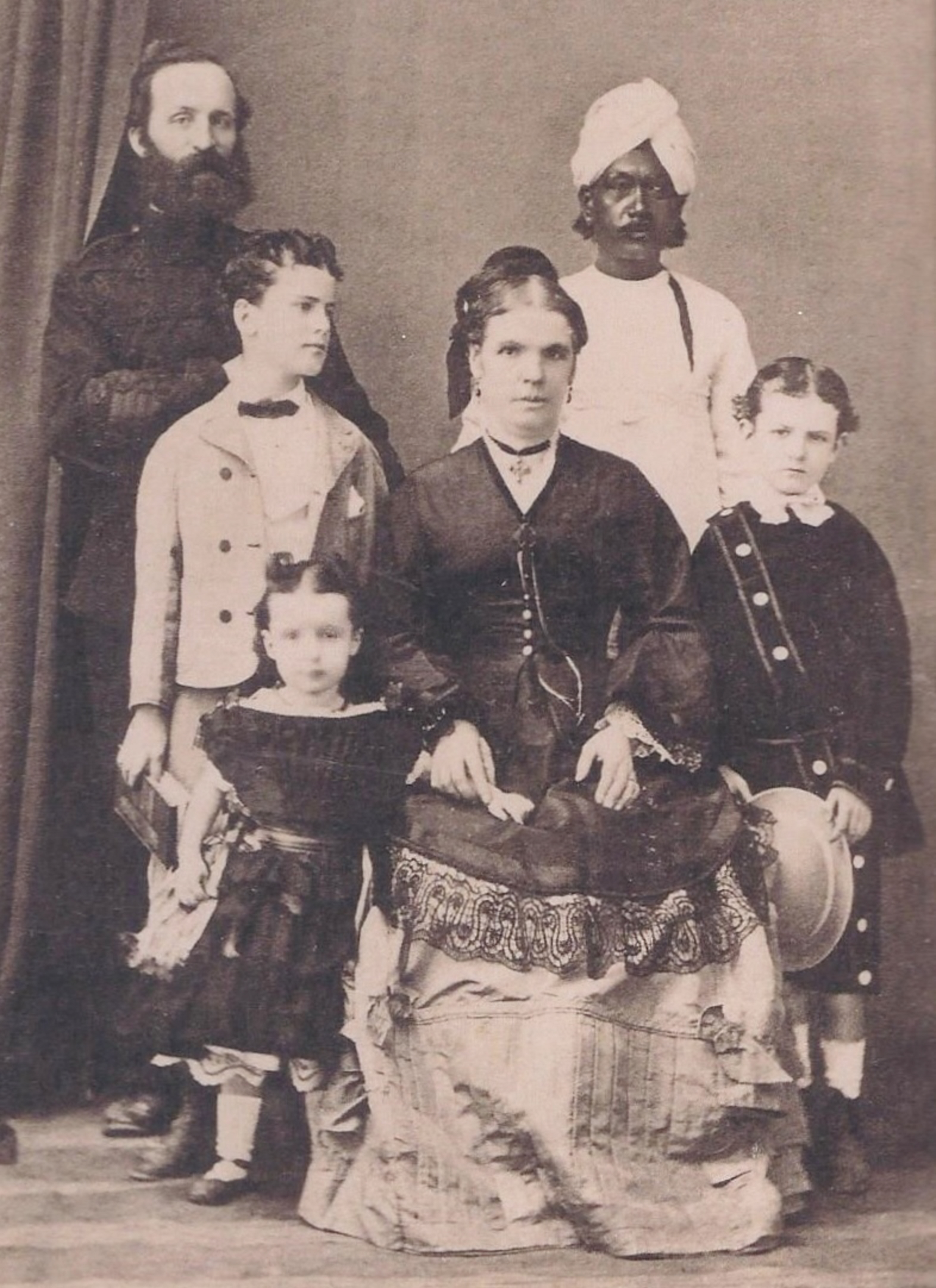
On 21st October 1873 Basil and family embarked for India from Queenstown on the troopship Jumna. They arrived in Bombay on 23rd November, before moving on to their quarters in Umballa (Ambala) in the Punjab. They were to spend two and a half years in the heat and dust of the British Raj. Surprisingly perhaps, given his impressionable age at the time, Basil’s memoir offers no memories at all of his childhood years in India. In a family photograph taken in 1876, when he was around eight years old, Basil appears as a smartly dressed little boy holding a hat – maybe a pith helmet. An Indian servant – identified on the rear of the picture as “Nounsouk – the bobigee” – occupies equal standing with Henry himself, at the back of the family group. It’s striking though that, even at such a tender age, Basil manages to project a sense of brooding intensity.
The significant events that took place during their stay were an outbreak of fever in Umballa, which caused them to temporarily evacuate “under canvas” to “Jundlee” for a month at the end of 1874; a Durbar in Delhi for the Governor-General on 3rd March 1875 and the visit of the Prince of Wales (the future Edward VII) in December1875, for which the 4th Battalion provided a Guard of Honour.
The Westley’s returned to the UK in June 1876, where Henry was discharged after the end of his twenty years’ service. Henry hadn’t finished with the military, however, and he later signed up with the 3rd Battalion, the Derbyshire Regiment (2nd Derbyshire Militia) as a Staff Sergeant. Consequently the family relocated to the less tropical surroundings of Chesterfield, and it was here – in 1880 – that twelve-year-old Basil secured his first proper job, at Bales & Woods Printers on Glumangate in the town.
Man and Artist.
In 1881 Basil commenced work as a painter of China pottery at the Crown Derby porcelain works on Osmaston Road in Derby7. Presumably he had demonstrated some level of artistic talent to secure the job with the company, nevertheless, in May 1882, he sat and passed the Elementary (Model) drawing examination at Derby School of Art. Basil’s artistic skills no doubt helped him pick up his next job in a profession that was to shape his life. In 1883 he started work as a Lace Designer and Draughtsman, at the lace manufacturing company owned by John Burton, whose premises were on Thoroton Street in Nottingham8. This coincided with his father’s discharge from the Derbyshire Militia and the family’s subsequent return to Henry’s hometown.
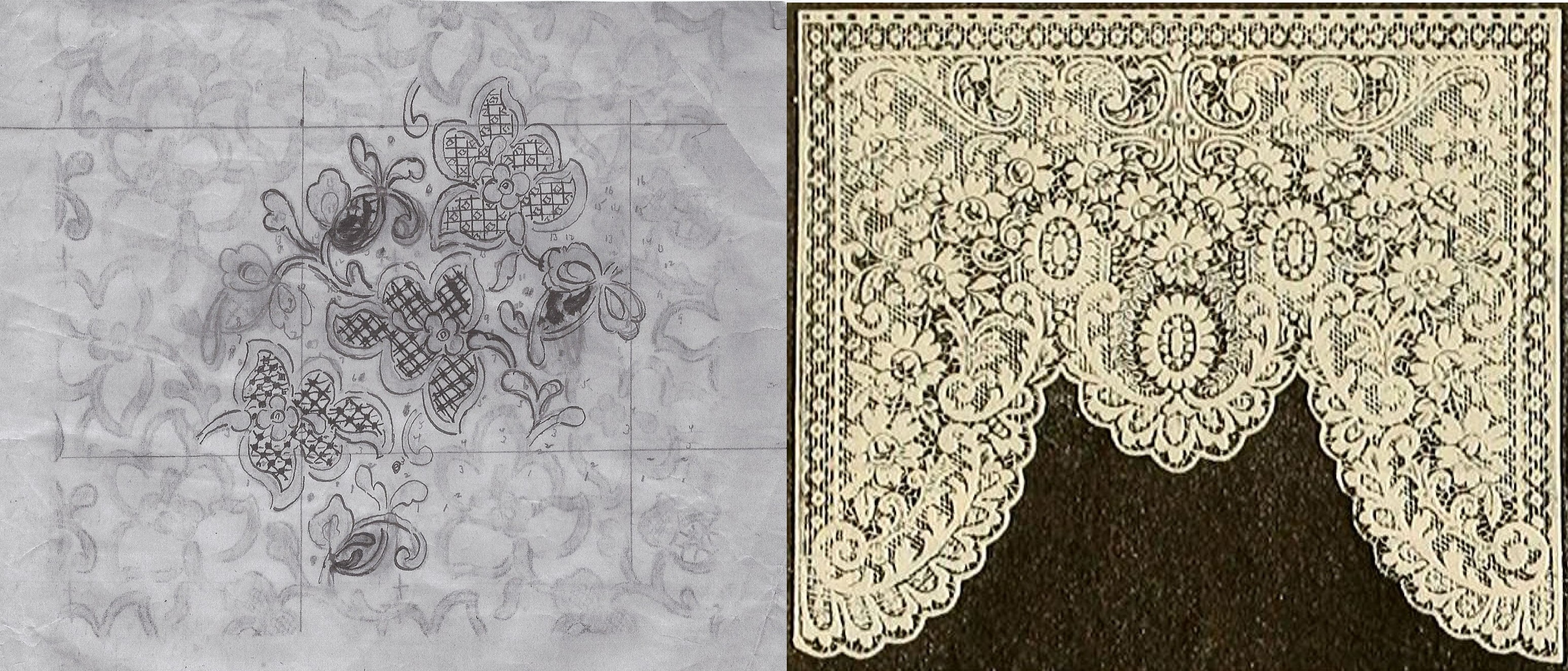
Nottingham, at that time, was the world centre for the manufacture of decorative lace and also the process of mechanisation that made the industry such a force. New and increasingly innovative machinery, in turn, allowed the production of finer, more intricate, patterns than were able to be produced by hand. This superior machine-made product was soon known the world over as Nottingham Lace.
The Merriam-Webster Dictionary defines Nottingham Lace as “any of the various flat laces and nets machine-made originally at Nottingham, England and used for curtains, dresses, tablecloths”. Other definitions refer to the intricate designs and patterns, including floral motifs and open spaces, which create a “light and airy effect”, or with scalloped or zig-zagged (picot) edges. Whatever it may have been in practice, identifying your product as Nottingham Lace gave it a certain cachet that was likely to make it even more desirable. Throughout the nineteenth century, Nottingham remained at the centre of the mechanised lace-making universe. Such intricate designs, often use for curtains or tablecloths, needed designers… which is where Basil’s artistic skills came to the fore.
In his memoir Basil suggests that in 1890 there was a “Big Strike all factorys closed down – complete stop.” However, looking through newspaper reports of the time, I can find no reference to such an all-encompassing strike in Nottingham, other than ad hoc disputes and various industrial tensions which, in 1893, threatened a strike. There was a strike in Calais which did shut down lace factories and lock out the workforce, but this only lasted for a month or so in the Autumn of 1890. Whilst this undoubtedly had an impact on Nottingham businesses (there were strong ties with the industry in Calais as we shall see), there does not appear to be anything that occurred on the scale that Basil references.
Anyhow, whatever the actual situation, Basil does seem to have been let go by Burton and, as a result, he recalls in his memoir that he became a “counterman” with the Home and Colonial Stores in Manchester and after that, in Hartlepool and South Shields until 1892. The 1891 census, taken on the night of 5th April, records Basil still living with his parents at 25 Hedderley Street in Nottingham, where his occupation is described as ‘Grocer’s Assistant’.
Basil tells us that, in 1893, he received a telegram letting him know that the strike was over and, consequently, he rejoined his old employer in Nottingham. The following year saw him on the move again though. He was engaged as a Lace Designer by the lace manufacturer W. Spowage, based on Ossington Street, in the Radford district of Nottingham. Three years later, in 1897, with his stock clearly on the rise, Basil appears to have gone freelance, working for multiple lace companies in Long Eaton, Derbyshire9.
Rather surprisingly, Basil’s memoir omits to mention two very significant moments in his life that took place around this time. The first of these was his marriage to the widow Frances Garrick Caborn (née Eite), which took place at St. Barnabas Roman Catholic Cathedral, in Nottingham, on 17th August 1899. Frances (known as ‘Fannie’) had been born on 1st September 1867 on Barker Gate in Nottingham. The second event was the birth of their daughter, Frances Garrick Westley, who was born in Nottingham on 31st May 1900. Fannie already had a daughter from her previous marriage called May Caborn, who was four years old at the time of the wedding, and she too was welcomed into the ranks of the Westley family.
It’s worth mentioning at this point that Basil had adopted his mother’s Roman Catholicism. He was active in church circles and was a member of the St. Barnabas Institute. A report in the Nottingham Evening Post dated 4th April 1889, relates that he had “designed and illuminated” an address given to a priest during a gathering of members the previous day.
An Englishman Abroad.
Hot on the heels of the birth of his daughter came another life-changing moment. Basil was, in his words, “engaged by Messieurs Gentis and Catte [to] start lace factory in Caudry Nord, France”10. The commune of Caudry lies around 165km South-East of Calais, 20km, from Cambrai, at the time it was considered to be the lace capital of France. Today it still calls itself the French City of Lace11. There were long standing links between the lace trades of Nottingham and northern France, particularly Calais. Manufacturers and personnel moved between both cities during the 19th Century. Lace manufacture may even have been originally exported from Nottingham to Calais. Calais has a ‘Rue Nottingham’ and was sometimes known as ‘Nottingham by the Sea’.
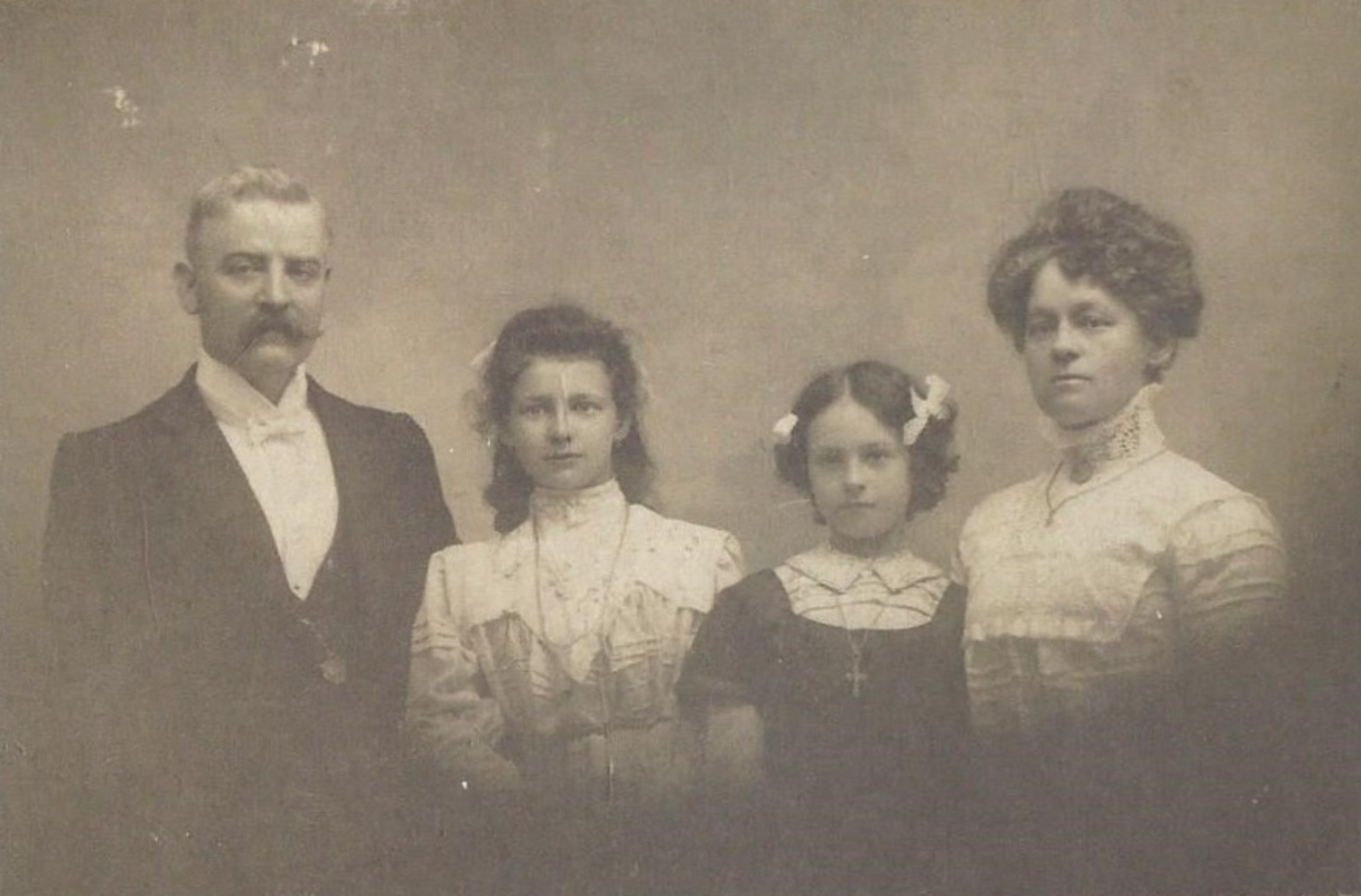
In Calais, Basil set up an office in his house at 35 Rue des Soupirants and the family was recorded living here at the time of the 1906 French census. By the summer of 1907 they had moved to 39 Rue du Jardin des Plantes, and this was still the Westley’s home when the 1911 census was taken. The two houses lay only 700 metres apart in the central district of Calais. On the census documents for 1906 and 1911 Basil is recorded as being a Dessinateur, which isthe French word for both draughtsman and designer.
In his notes covering these years, Basil does not mention the deaths of his parents. His mother, Mary, died on 12th March 1905. Henry Robinson Westley died on 17th June 1907. We know that Basil attended the funeral of his father, from an account of the interment published in the Nottingham Evening Post on 21st June 1907. Whilst in Nottingham Basil placed the following advertisement in the same newspaper (dated 11th July 1907):

The request for a “moderate drinker” was a poignant one. His father had died an abject death as an alcoholic, and it doesn’t leave too much to the imagination to believe that Basil had probably witnessed first-hand the hard-drinking culture of the army during his years in tow with the Rifle Brigade.
Three years later, and true to form, Basil’s memoir fails to record another momentous event in his life – the death of his wife Fannie on 19th November 1910, aged just 42. A family notice placed in the Nottingham Guardian on 25th November 1910 reported that she died “suddenly”.
On 29th April 1912 Basil married his second wife, Pétronille Marine Rock, in Calais. Marine, who was a divorcee12, had been born on 31st May 1898 in Sangatte. Her occupation was described as ‘nurse’ at the time of the 1911 census. She was the mother of four children from her previous marriage, the youngest of whom was 13 years old at the time of the wedding. Accordingly Basil moved to live Sangatte. It’s not precisely clear where they set up home at that time, but Marine was resident in Le Cran d’Escalles at the time of the 1911 census – this was an area of Sangatte close to the coastal path connecting Sangatte with Cap Blanc-Nez. Always understated, Basil’s only comment on these events in his memoir is:
“1912:1914 – Went to live in Sangatte near Calais (with office at Calais).”
Witness to the Dawn of Manned Flight.
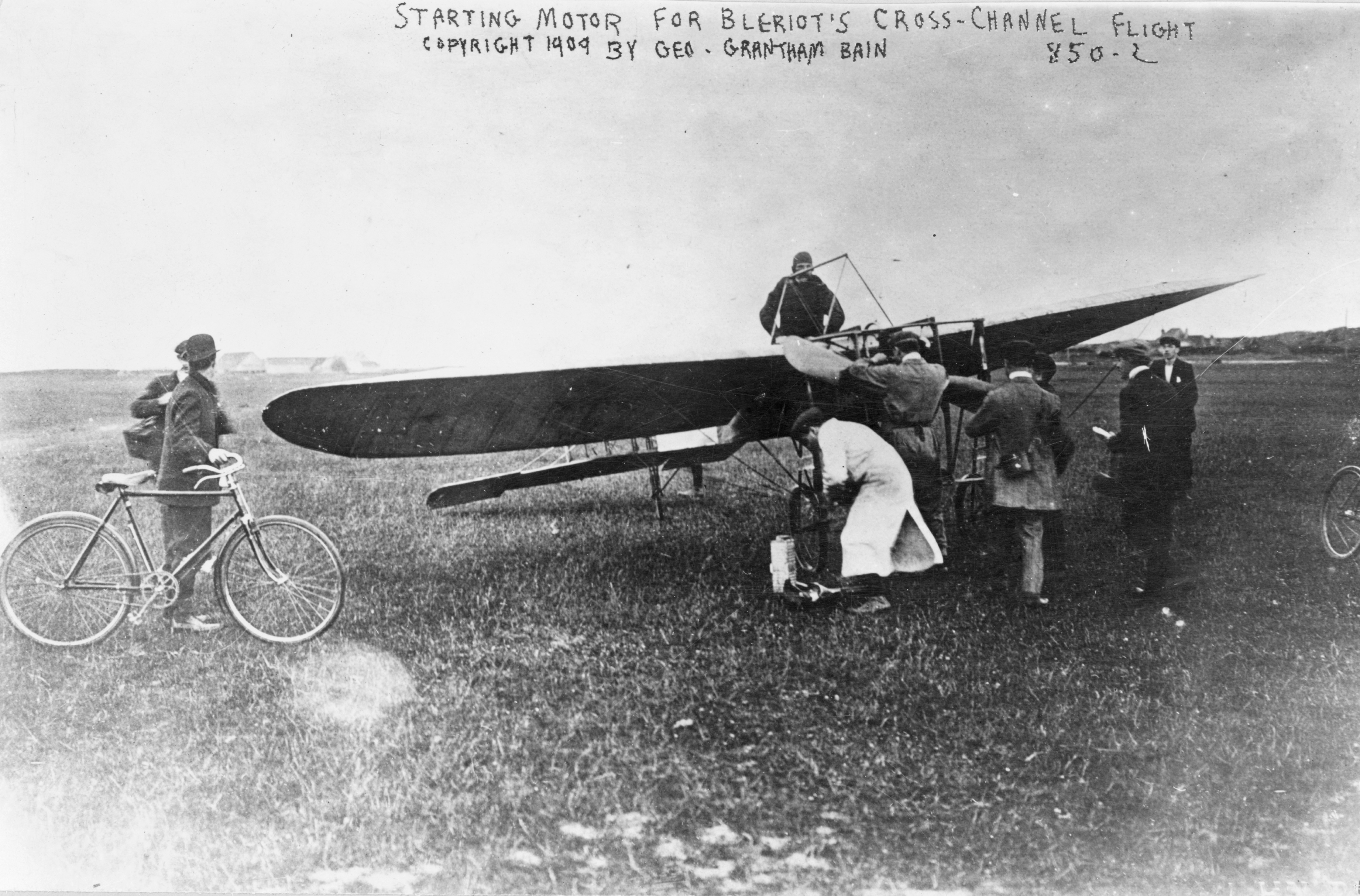
Towards the end of the twentieth century’s first decade, Calais and its coast was the front line of the race to cross the English Channel/La Manche by air. Basil was appointed “…voluntary ‘delegate’ for our district of the French Aeronautic Society and one of my duties was to help any aviator who landed on our coast.” Basil goes on to put himself right at the heart of the action by clarifying, “That was just after we had assisted in the first attempts to cross the channel by Latham and Bleriot.”
French nationals Arthur Charles Hubert Latham (1883-1912) and Louis Blériot (1872-1936) were fierce rivals for the prize of being the first aviator to cross the Channel. The Daily Mail newspaper had offered a prize of £1,000 to the first flyer to achieve this feat. It fell to Latham to make the first attempt at the crossing, on 19 July 1909. He took off from Cap Blanc-Nez, very near Sangatte, but after only 8 miles his Antoinette IV aeroplane suffered engine failure and Latham had to ditch into the water. The undamaged fuselage remained afloat, so he lit a cigarette and awaited rescue by the French military vessel that was following him.
Later, on the morning of 25th July 1909 Blériot’s team were camped in a field at Les Baraques, near Calais. They had been there for two days. At about 3 am they noticed a break in the weather. They awakened Blériot, prepared the aircraft, and waited for first light, hoping they could attempt the crossing. Latham’s team, however, slept through the night and failed to notice the opportunity. The favourable conditions held and Blériot took off precisely at dawn (4.41am) to make the first successful crossing of the English Channel by aeroplane. Crossing the English Coast at St. Margaret’s Bay, he landed at Northfall Meadow near Dover to win the prize and take Latham’s place in the history books13.
In his memoir Basil relates a couple of stories about other aviation pioneers:
“I had a small seaworthy boat also, the only one on that coast between Boulogne and Dunkerque. To give you an idea of the situation I will relate an incident: On about the 10th July 1911 an aeroplane landed on the field of Bleriot and I supplied him with the petrol and oil he needed. He was Mr. Morrison, one of the first to make the voyage from Paris (where he had just bought his machine) to Lympne.” 14
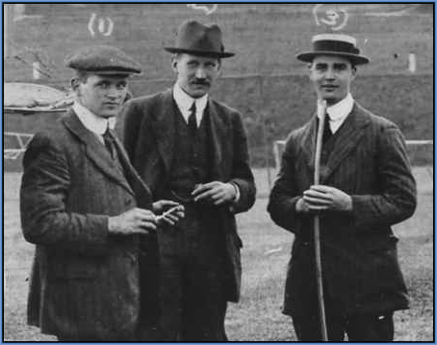
The aviator was Oscar Colin Morison (1884–1966) an early British flyer. He had won a well-publicised air race between Shoreham and Brighton, also in 1911, and went on to fly with the Royal Flying Corps during the First World War. Morison purchased his Bleriot aircraft from Paris in 1910 – so this encounter may well have happened a year earlier than Basil recalls. He goes on:
“In those days a slight wind was too much. We looked at the sea, there was a slight haze. He said, “I cannot see the coast, what am I to do”?
“Well”, I said, “if you engage the tug, it can proceed just half-way to Dover, when you get over it you will see Dover. It will cost you 375 Francs for the tug”.
“Oh, no”, he said, “I want to do it on my own”.
I offered a life buoy, a strong one of cork capable of upholding 4 persons, he refused it, no doubt because it was too heavy. “Well”, I said, “I tell you what I will do – it is now 10 O’Clock & I will bike home at once and put my boat out and arrive exactly at 2 O’ Clock in the middle of the channel & hoist a big white balloon, you go up at 2 exact & when you pass me you will see Dover”.
He agreed and I went home at full speed, threw some grub and a bottle of Guinness in the boat, launched her, put my sail up; put my watch on the seat in front of me & pulled away to the middle of the channel. The spectators on the beach said I disappeared like a streak of lightning. I arrived in position & could see the coast. I kept her in the tide without moving & 5 minutes after Morrison passed over my head. I have a letter still in which he thanks me for his safe arrival. On that occasion I meditated continuing to Dover, but turned around & got back, landing, however, 6 miles from Sangatte at Wissant about 6 O’Clock in the evening.
Just after that, perhaps a month; Grace arrived at Barrak15 – unfortunately, although I tried to get in time, I just arrived to see him and his aeroplane disappear in a cloud leading directly to the North Sea. Had I arrived 5 minutes sooner, his life would have been saved no doubt.”
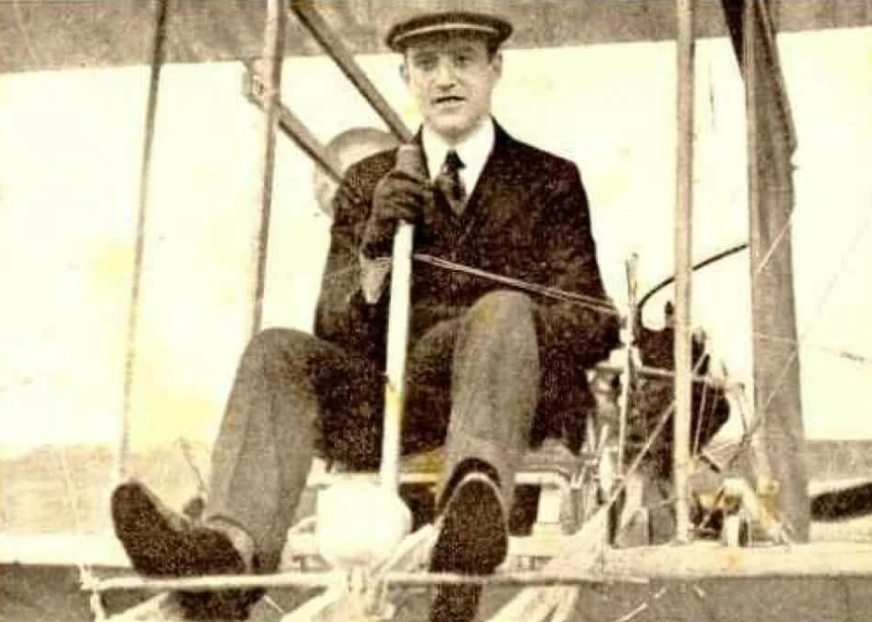
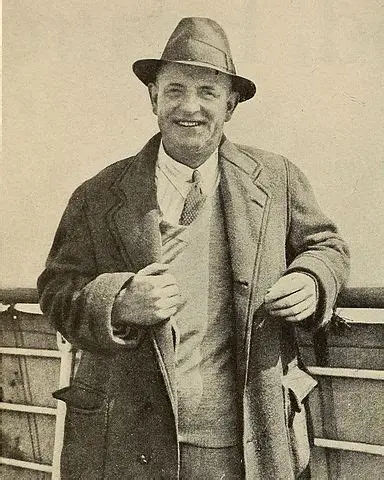
Basil is referring here to Cecil Stanley Grace (1880 -1910) – pictured abive (public domain). Grace was a renowned British aviator who was competing for a prize of £4,000, offered by Baron de Forest16, for the man who could make thethe longest flight from England into Continental Europe. Despite making it to Calais, strong winds persuaded him to return back across the Channel to England. As Basil relates, Grace was never seen alive again. His disappearance was front page news for weeks in England. Although Basil describes this happening in the Summer of 1911, it actually took place in December 1910 – a month after the death of Basil’s wife. Artefacts from Grace’s aircraft and a badly disfigured body resembling Grace washed up on the coast of Belgium in January and March 1911.
A Hero on the Sea.
Basil seems to have been a veritable man of action when it came to the seashore around Calais and Sangatte and he relates several adventures in his memoir. In his own words, “While on this coast I have helped men wrecked or in danger.” He recounts that, between 1909 and 1913 he:
- Went in search of the missing mail boat from England (which also had aboard his brother-in-law and sister-in-law), only to find it aground on a sandbank. Wading up to his neck in the sea, he was able to both agree arrangements for the distribution of the mail and reassure his brother-in-law as to the safety of his situation.
- Came to the aid of a cement ship, which was stuck against the cliffs in a storm, by swinging a line to the high ground from his own boat on the perilous sea, so that a cable could be pulled from the stricken ship to facilitate the crew’s rescue.
- He spotted a torpedo “swashing about” in the water whilst returning on his boat from Calais. He presumed that it had fallen from a navy vessel. Basil secured it with an anchor and a cable and went off to notify the authorities.
- Saved the new local lifeboat, which was left on the beach after performing a daring rescue in frosty conditions. It was a race against time to get it hauled back to its station before the tide fully came in. Basil managed to obtain “…4 field horses”, so that he and the lifeboat Captain could pull it to safety. Each of them having “…both our shoulders under the boat heaving it desperately onto the wagon.” Despite their success in recovering the boat, Basil complained that both he and the captain’s backs were so “…severely ricked” that they couldn’t move for nearly a month afterwards!
- Went out into “fearful” stormy seas in his own boat to search for two men who had fallen into the sea from a Lowestoft trawler which had ran aground in the maelstrom. His search was unsuccessful, but the seamen’s bodies were eventually washed ashore. After their burial in Sangatte, he invited the recued crew of the trawler back to his house for a roast beef dinner.
It’s probably worth calling out that Basil’s proficiency with handling a boat probably had its roots in his time living in Nottingham. In August 1893, the Nottingham Daily Express and the Nottinghamshire Guardian both reported on the contest for the Seely Cup, between members of the Nottingham-based Britannia Rowing Club, which took place on the River Trent on Saturday 19th August. The trophy-winning ‘pair’ were a certain “W.H. Stancer and B.R. Westley”. Basil wasn’t so successful on 26th July the following year, when he and Stancer’s ‘coxed pair’ were knocked out in the heats. Rowing trophies that he had won in Nottingham were still in his possession during his time in Sangatte and, like the Crown Derby pot mentioned in footnote 2, in his judgement they warranted hiding from the Germans.
On 1st August 1912, a group of children were bathing in the sea at Sangatte under the care of a local man and woman. Basil happened to be working on his lace designs in a tent at the back of the dunes. He was worried though… following a storm the previous evening, the surf was up and consequently he believed that it wasn’t safe for the children to be playing there. He made his fears known to the couple looking after them, but they dismissed his concerns.
“Half-a-dozen or more” of the children joined hands and were playing “ring a ring of roses” in the waves, with some of them inadvertently being pulled into the deeper water. Then the chain broke, and the separated children were sucked away. Basil recounts the story:
“… I could hear their cries quite plainly. All at once a girl rushes up screaming, “Come quick they are drowning”. Taking up a heavy lifebuoy (cork for 4 persons) I rushed about 150 yards to where the children were, but with the sight of the thunderous waves breaking in I realised with that heavy buoy I could never get through them. Two waterlogged girls could be seen out from the shore appearing only on the crest of the wave. As I was lightly clad thin trouser and sweater I went through the waves until as I judged I was on the outside of them & catching a glimpse of one in the boiling water in front of me I ‘windmilled’ around it and managed to edge it into the hands of some people wading in the shallower water, again going in for the other one. In that surf it was impossible to see, but a man on shore pointed my direction but after vainly searching I came ashore about 200 yards as there was a strong current washing out to sea at that point and the body of that child was washed ashore 5 miles off at the Casino at Calais.”
Basil’s modesty gets the better of him here. What he doesn’t mention is that, in February1913, the Navigazette – Paris and L’Ouest-Éclair newspapers reported that he had been awarded the “silver rescue medal 2nd Class… to recognize the dedication he has shown in going to the rescue of six young girls at risk of drowning, on the beach of Sangatte”.
In addition to the above accounts of heroics on the water, Eileen Hutson suggested that, according to family lore, Basil may have also supported Captain Matthew Webb’s cross-channel swim. However, this could not have been the case. Webb’s first successful swim was in 1875, when Basil was 7-years old. Indeed Webb died in Niagara in 1883 aged only 35 years old old, years before Basil arrived in Calais. There were, however, around eleven successful attempts to swim the Channel during Basil’s time in Calais-Sangatte. These included Thomas William Burgess, a British-born naturalised Frenchman who swam ‘La Manche’ in 1911. The first woman to swim the channel, American Gertrude Ederle, who completed it in 1926. Mercedes Gleitze managed the feat the following year, on 7th October 1927, becoming the first British woman to complete it. Another British man, Edward Temme, swam the Channel in 1934. Knowing Basil’s interest in the sea, and his fascination with human achievement generally, I think it is entirely possible that he could have supported any of these attempts, although it is important to say that there is nothing in his memoir to indicate this.
Basil Goes to War.
Basil writes in his memoir that, by June 1914, he sensed the inevitability of war. The assassination of Archduke Ferdinand of Austria in Sarajevo, which precipitated the conflict, didn’t happen until 28th of the month, so this was incredibly prescient on his part. To prepare for what he expected was to come he, “…went over to Deal (in Kent) and bought a typical Deal boat 17 feet long for 10F and pulled and sailed her over to France doing the passage in exactly 8 hours. During the war I kept it under cover behind the house ready if wanted.”
On Saturday 1st August, Germany invaded Belgium, thereby violating their neutrality and triggering action by their allies: Britain and France. On the same day, which was two days before the French declaration of war on Germany, Basil travelled to Calais and closed his office. This involved paying off his four employees due to “Business not as usual.” He clearly felt the need to be proactive regarding the impending events.
His role with the Aviation Society came with an honorary attachment to the French 1st Army Corps. So, after the declaration of war, he cycled to the aerodrome at Hardelot, just south of Boulogne, to offer his services, only to find it had been closed by “military orders”. On his return journey he encountered members of the Oxford Light Infantry who had just arrived in France as part of the British Expeditionary Force17 . Basil tells us that he, “… had a chat with the Sergeant Major who said, “No my lad, we shall never come back, the job is too stiff, we shall be outnumbered”, and with deep emotion he told me that after many years’ service in India, he had just arrived at Portsmouth & was immediately re-embarked, without seeing anything of his long left home. No wonder he was downhearted.”
On 25th August 1914, Basil witnessed B.E.F. lorries being driven onto the docks at Calais. The drivers were “London busmen” who didn’t speak any French. Basil sensed another opportunity to get involved and he “…went rapidly home & I got a document from the Mairé, ‘To join the British Army’ and off I went to catch the busmen”.
It’s not clear what the document was that he was given by the Mairé. However, it enabled him to eventually catch back up with busmen at Dunkerque. En route he was interrogated by both the French and British armies, with the outcome that he was “enlisted on the spot”, although this was largely thanks to the intervention of a mysterious “Mrs. N” whom he apparently knew, and who was able to vouch for him. To mark the occasion he sent a postcard home to let his family know, writing “just joined the old flag ‘en avant la musique”18. Basil was later told by neighbours that they had spent “the whole day” comforting a distraught Marine and Frances when they received the postcard.
Basil’s first official task of the war was to guard the telephone box in a textile hanger. However, the local HQ was disbanded following the fall of Antwerp to the Germans19 and, consequently, he had no choice but to cycle back home to Sangatte (a distance of 41 kilometres, according to his memoir). Basil’s enthusiastic desire to contribute to the war effort didn’t dissipate though. He contemplated travelling to London to enlist which, for a man of forty-six years old, was optimistic to say the least. It was then that he received a letter from his elder brother.
Mark Harry Westley, who was living in London and working as a plumber, had also been seeking a way to play his part in the war effort. He had been rebuffed by “6 different recruiting stations” and had now turned his attention to signing on as a contractor for the army. To this end he took a job with William Harbrow Ltd. of South Bermondsey and headed to Harfleur, via Le Havre, where the company had obtained work.
After reading the letter, Basil didn’t hang around. He hit the road again on his bicycle, this time in the direction of Le Havre. On the way, at Abbeville, he was again questioned by the Police as a potential spy. Thankfully, he was allowed back on the road “…once they examined my valise”.
In Harfleur, now working for Harbrow, he became a roof sheeter and plumber’s mate (presumably for his brother). According to Basil’s memoir, “We worked 90 hours every week & that winter on top of a plateau putting roofs on stables for 10000 horses. For months on end we were soaking wet through and out of 300, 100 men were laid up & had to be sent to England, we buried 2 on the camp.”
When the Harbrow’s contract ended in March 1915, Basil hitched a free boat ride back to Calais. The following month he was engaged by another army contractor: W. G. Tarrant Ltd. of Byfleet in Surrey. This time the work involved building a veterinary camp at Peuplingues, not far from his home in Sangatte. In June he was transferred to work on erecting the Army Post Office on the docks at Calais.
If he didn’t know it already, on the 7th June he received a reminder that the war was right on his doorstep. Basil tells the story:
“I occupied a small wooden office on the docks Calais and one of my duties was to keep the time on the job which was a big one. On the 7th June I blew my whistle exactly to the minute 12 O’ Clock. Instead of going in my office for my cold dinner I changed my habit and went off to the dock gatekeeper’s house 50 yards off to have some soup hot; when without warning a bomb fell on one side of the house & another 3 yards from my office door killing a woman named Daudanthun & filling my bike, a B.S.A., with shrapnel, the office shattered & my sweater & dinner blown to bits. Almost immediately an ambulance was on the spot and we put the dead woman (her breasts were blown out) in; several of our men came up and shook my hand saying, “if you had not been so punctual in blowing your whistle we should have been caught by the bombe.”
7 bombs fell on the docks in total. Amazingly only 4 people were wounded in addition to the woman who was killed.
To Gallipoli.
During the summer of 1915, Basil was employed fitting roofs to stables at the “Horse Remount Camp”, Coquelles. He proudly opined that, “I can say that my roofs never leaked”. Then, in October, he received a telegram “from London” – it read, “Off to the Dardanelles come at once”. Presumably, the telegram came from his brother Mark Harry (Basil doesn’t say). Whoever it came from, he made immediate arrangements to travel to London and meet up with his former colleagues from Harbrow Ltd., at one point threatening to hop into his own boat and sail across the Channel if he wasn’t given the necessary paperwork.
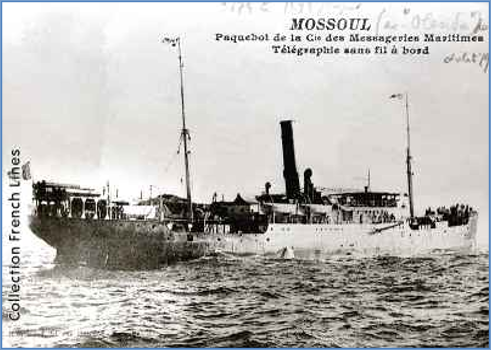
After passing a medical in London, he joined 75 fellow contractors from Harbrow’s en route to Gallipoli, via a train journey to Paris and then Marseilles. In Marseilles they were put to work whilst they waited to depart until, one morning, “we were roused out of our beds at 4 O’ Clock” and embarked at once on the maritime courier ship Mossoul. During the voyage their French escort ship fought off a submarine attack. They had a brief layover in Malta, where Basil was able to relive some childhood memories of his family’s sojourn there during their voyage to India in 1873, and also visit the church where he mistakenly believed his parents were married20. One final stop in Piraeus (Athens), enabled Basil to fit in a visit to the Acropolis, before the Mossoul got back underway.
They eventually arrived at the port of Moudros on the Greek island of Lemnos. Lemnos was being used by the British and their allies as both a staging point and a supply base for their assault on the Gallipoli peninsular. It was around 60 miles from Moudros to the tip of the peninsular. For Basil, it was an immediate introduction into the horror and futility of the fighting that had been raging there since 25th April 1915. As he relates in his memoir:
“… my first job was putting a fireplace in a typhoid fever hut, Canadians 29th Division Hospital. The hospital was full of fever & dysentery cases, hundreds of men, it was pitiable to see their yellow and green faces.”
A few weeks into his time on Lemnos, the water ran out. The water had been, until that point, shipped in from Alexandria, but the ships carrying it were subject to submarine attacks. Despite the spirit-lifting plum pudding (a gift to the soldiers from Queen Alexandria), Christmas Day was spent with, “…no beer, no water, at 6 O’ Clock, unable to smoke through a parched throat, I went to my bunk to sleep and forget Xmas day 1915”.
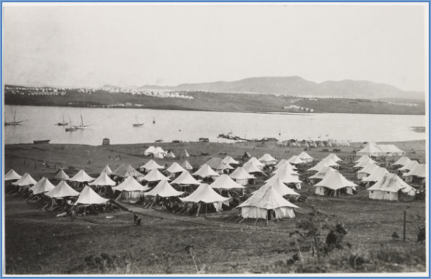
To solve the water problem, a condensing plant was constructed on Lemnos. Basil and fellow plumbing contractors from Harbrow’s were set to work in running pipes to Sarpi Camp – a rest camp for Australian troops. They worked side by side with Egyptian labourers who, according to Basil, “…died like flies, sometimes before our eyes” due to drinking poisonous ground water, rather than waiting for the “boiled tea” that was issued to the contractors.
As the Gallipoli campaign drifted towards a costly stalemate. Basil witnessed the flow of allied casualties arriving from the front to the field hospitals in Lemnos. With negative publicity an increasing problem back home, the decision was eventually made to evacuate the Allied troops.
The ANZAC troops left the peninsula first, completing their evacuation by late December 1915, with the British and Canadians following in early January 1916. To the backdrop of “… deep rumblings and explosions” Basil witnessed an Australian regiment arriving back on Lemnos, “…Their faces were terribly stern & set and they appeared very much annoyed”.
The ship that Basil and his colleagues were lined up to embark on was deemed unsafe during boarding, which meant that they had to endure another couple of weeks on Lemnos. Because the beds in the camp were now being occupied by evacuated soldiers, Basil had to “…sleep 10 nights on the hard floor”.
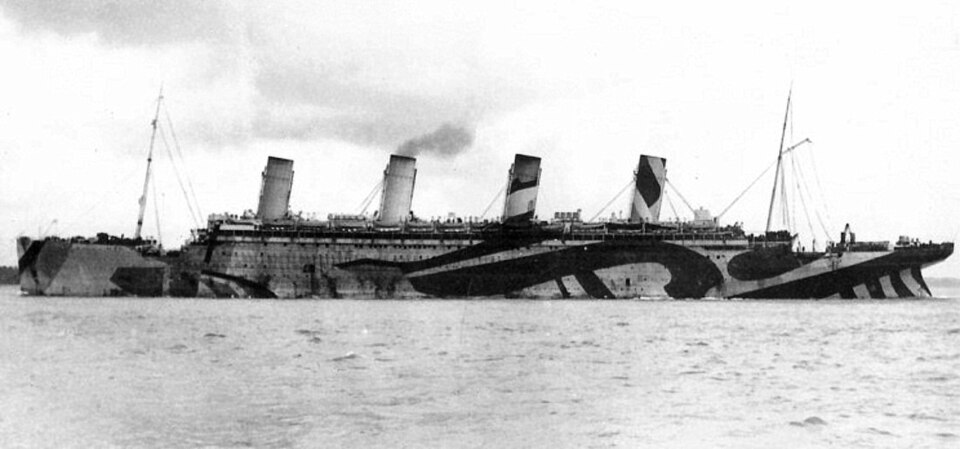
Eventually they were ordered to embark on the Olympic – the sister ship of the Titanic, which had sunk only four years previously. She had been converted for service as a troopship. They arrived back in Liverpool after a voyage of 18 days and one stop in Spezia, Italy. Basil caught a train to London, where he collected his hard-won earnings, before making his way back home to France.
The War in France.
The war work didn’t stop for Basil. In March 1916 he was, once again, taken on by W. G. Tarrant, and found himself where he left off at the “Horse Remount Camp” in Coquelles. After that he was engaged to work on the tented hospital camp set up by Millicent, Duchess of Sutherland, at Bourbourg, 20 kilometres inland from Dunkerque. The hospital was known as ‘the camp in the oatfield’ and was famously the subject of a series of paintings by the artist Victor Tardieu21. At this time, Basil also worked at a camp housing one of the New Zealand veterinary units and the Australian Imperial Force (AIF) camp at Fréthun, 10 kilometres from Sangatte.
In August 1916 Basil was sent to a camp at Dunkerque which he called “Camp Petranché”. According to his memoir, this camp had previously been heavily bombed, and a number of previous contractors had refused to work there. Basil recalled that for, “…10 months I slept and worked on that camp I saw a lot of bombing”.
One early morning in September 1916 the camp was hit by a torrent of shells (160 of them according to Basil). These were fired from a German torpedo boat off Dunkerque. Basil remembers:
“… a loud whistling sizzling noise to right and left followed by explosions – The sand of our camp rattled on the tin sides & roof like hail and all the cannons of Dunkerque for a quarter of an hour were roaring, making a deafening din.”
Again, miraculously, there were only 2 fatalities – a dock worker and local resident.
Basil describes several other occasions where he found himself under German bombardment whilst working as a contractor around Calais, Dunkerque and St. Omer. Some of these incidents were very close encounters indeed – including one that killed a number of the same Egyptian labourers who were with him on Lemnos and who had since been deployed to Basil’s camp in France. Basil, however, survived. His secret to being indestructible?…
“Sometimes if I was on a roof when a bomb fell (sometimes the aeroplanes were so high up that you neither heard them or saw them & the bomb would fall before the siren went) as I always stopped on as it was more dangerous to seek shelter. When unloading trucks in the goods station I generally laid down in the 6 foot between the lines under the trucks.”
A Difficult Peace.
Upon the war ending in 1918 Basil re-opened his office in Calais. He’d received a few orders for lace patterns and so re-employed 4 of his staff. He noted that a couple of them had become amputees following the war. However, he soon found that the level of orders coming through was not sustainable and, nine months after re-opening, he laid his staff off again.
Not fazed by this, “…as it was harvest time, I engaged on a thresher. For about 8 months…”. Basil and his thresher crew went from farm-to-farm assisting with the corn harvest. It was hard work but paid well, with meals usually provided by the farms.
In May 1920 he resumed his work as a lace designer in Sangatte. Orders eventually began to pick up and this sustained Basil for about ten years, enabling him to put a bit of money aside. However, the passing of the 1930 Social Insurance Act, effective in France from 1931, meant that employers had to pay a significant contribution on behalf of their staff. Despite the clear benefits to many working people, Basil felt that this “…put the final blow to the waning [Lace] trade.” Not being able to face living “on the dole”, Basil lived off his savings for a few years.

The Battle for Calais.
After nearly ten years of peace, and just as there were signs of a resurgence in the lace trade, political tensions in Europe changed everything. As he did in 1914, Basil had another premonition that there would soon be a war. Convinced that he would be in the firing line for a second time in 25 years, Basil took some of his most-treasured possessions over to England23. He left them in the possession of his daughter Frances, who had married in 1919 and was now living in Bromley, Kent.
War was declared on 3rd September 1939. During the quiet of the so-called ‘phoney war’, before any serious fighting had taken place, Jack Hartshorn – the British honorary consul of Calais – notified the local ex-patriate community of plans for their evacuation, should Germany invade France. As usual Basil was robust in his response, “…I told him that if the Germans came I would not shift an inch from my home in Sangatte”.
The German army moved into France on 10th May 1940, ending the ‘phoney war’. On the same day they launched invasions of the Netherlands, Belgium and Luxembourg. They were met in Northern France by the French army and a British Expeditionary Force, but the German advance was rapid, and the allied forces were pushed back towards the coast.
Basil recollects that, as the news filtered through, there “…commenced the exodus, for days, although our road was only a coast road, thousands passed – Belgians, Dutch, motor cars, perambulators and, covered by a special red screen, Germans in plain clothes who changed into uniform & armed in the middle of the flying population.”
There were just over 200 British nationals in Calais itself, with a further 1,400 across the Pas-de-Calais region. No evacuation was ever ordered, although HMS Venomous, sent to evacuate some military personnel from the area, took on board just over 200 British refugees on 21st May. Some of them left under their own steam on smaller boats. Others, like Basil, chose to stay behind.
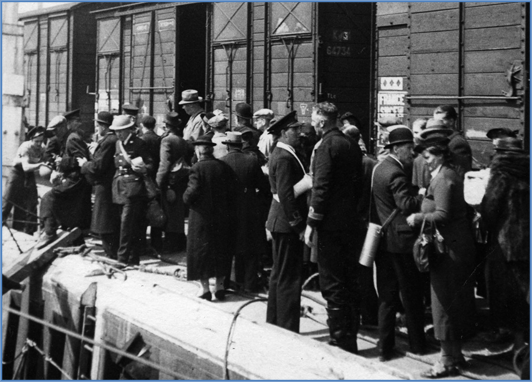
At the same time, the retreating British Expeditionary Force was being cornered around the nearby town of Dunkerque, just 50 kilometres along the coast. A combination of unimaginable heroics, masterful organisation… and a huge slice of luck, as the surrounding German Army hesitated, meant that the defeated B.E.F. and many French soldiers could be evacuated from the beaches and back to England between the 27th May and the 4th June. The day before the evacuation started the Germans entered Calais.
Wodehouse and Me: The Internee.
As the battle for Calais unfolded around him Basil was, as usual, not hiding away. In his memoir, he recollects “inspecting the sea front” winding his way in and around deserted houses and interrogating any British soldiers he came across on the road24, testing their knowledge of England to make sure that they weren’t Germans operating undercover.
With “dog fights” taking place overhead, he decided to proceed to Calais, but other villagers warned him off, believing it to be too risky, because of the German presence there. So, instead, he returned home and watched the “pandemonium” of the unfolding battle from a distance, whilst noting the increasing numbers of German soldiers and equipment passing by, including “S.S. men” who were “…coming through at full speed”. Eventually, “Germans filled the village”. Sangatte was locked down. Basil tells us that “every yard was sentried”, including the beach and surrounding countryside too. “Personally I could not move, there was a lookout besides the sentry above in a window overlooking my garden back and front always there; and if you moved out after dark you risked being shot.” Basil kept his head down for the next few weeks. Then, one day, “… the Mairé arrived with 2 German officers & 2 sentries”. Basil and Marine were instructed to travel to Coquelles, “…to be examined”. Marine, by this time, was partially bed-ridden with limited mobility25. They were promised transport, but this turned out to be a high-sided beetroot wagon, escorted by two officers on horseback and a couple of sentries. Marine was “seated behind the horses”, Basil chose to stand on the side of the wagon. He relates that:
“The whole village turned out & a great many were together in front of the local grocer’s, many crying & sobbing with grief and rage. As we passed I waved my hat and in my best pilots voice shouted, ‘Vive la France‘, ‘Vive Sangatte’! Someone in the crowd responded with, ‘Vive L’Angleterre’. The German’s had a bad press!!!”
Prior to Basil’s detention, on 14th July, the Germans, who had been stirring up anti-British sentiment in Calais through articles in local newspapers, issued a proclamation stating that all British subjects over the age of eighteen had to report to the local Town Hall or they would be assumed to be a spy and “judged accordingly”, i.e. shot.
The residents were expecting a round-up and rumours circulated that local functionaries had already been taken away to Lille. Another British subject, businessman George Arthur Gregson26, was living in the neighbouring village of Escalles. He was taken to the Mairie and into custody on 26th July and from there to Coquelles. George kept a diary. The entry for 27th July reads as follows:
“July 27th: Horrible coffee – tasting like dirty water – in the morning. Stayed in the billet all morning, under guard of course. Germans brought us a very good stew about midday. About 2pm, we all got into a lorry and were taken to Les Attaques, where we found other English. We had been joined in the morning by Mr. and Mrs. Wesley, each 72 years old, from Sangatte and, one way or another, our party had grown to 14. At Les Attaques, we found others from Calais, principally women and children and including Mrs. Yule and Mrs. Sarginson. Germans gave us some tea in the evening. Slept pretty well though feeling doubtful about the straw”.
Basil’s version of events also mentions the straw:
(Screenland Magazine August 1930/Public Domain).
“At Coquelles, instead of being examined, we were transferred to a car with about 20 more & that night slept in a barn on the straw27, afterwards by train to Lille, where we were all herded in the yard of the Vandamme Military Barracks to be sorted out. There were more than a 100. A good many were detained some time in the barrack rooms, sleeping in straw on the floor, others, who were rich and possibly to be bled by the Germans, were sent to Germany concentration camps. P.G. Wodehouse, the writer, who was one, being sent to Berlin itself, but myself and & wife, & what I could see of it, others who, like ourselves were comparatively poor, were given billeting tickets and dispersed to Lille & other places.“
Many of the men, including Wodehouse and George Arthur Gregson, were sent via Berlin to their permanent place of detention, the internment camp Illag VIIIH at Tost (Toszek), forty miles northeast of Katowitz (Katowice) in Upper Silesia, now part of Poland. Basil’s age and Marine’s infirmity appears to have counted in their favour. Basil and Marine were driven to Lille and ensconced in a house on the Rue Charles de Muyssaert (either number 23 or 25).
Basil was not impressed with the accommodation, which was “…an empty house just vacated by soldiers, dirty, all the windows broken, broken fireplace.” Luckily for him, a local couple, Monsieur and Madame Roman Stalen, came to their rescue and invited Basil and Marine to lodge with them. Basil writes in his memoir that “…their kindness I shall never forget”. The Germans were happy with this arrangement, on the condition that Basil reported to their Commandatore each week. Otherwise, he and Marine appear to have been treated well by their captors. They were given an allowance of one thousand Francs per month, plus a ration card. Local people made sure that they didn’t want for clothing or other necessities.
In 1941, after a year in Lille, Basil petitioned the Commandatore to be allowed to move closer to Marine’s family, who lived in Mayenne, in northwestern France. This request was refused because Mayenne was “…too near the sea”. However, they were moved eight miles northeast, to the commune of Wasquehal, close to the Belgian border. Basil relates an outwardly amiable exchange with the Commandatore as the move to Wasquehal was agreed:
“Mind no politics, or we will put you in a concentration camp”.
“Politics, politics”, I cried, “I am not a politician, I am a philosopher”!
“Oh, I know, I know”, he said wagging his fingers at me as if he knew my insides.
In Wasquehal Basil recalls receiving “…great help & kindness” from the Mairé and other residents. This support was, no doubt, especially welcome in September 1944 when Marine died in the local hospital. Her death coincided with the German army’s retreat from northern France in the wake of the D-Day landings. As they retreated, they blew up a bridge over the River Leie near Armentieres, which meant Basil had to take a 30-mile detour to get to his wife’s funeral. The ceremony had finished by the time he arrived.
In his memoir, Basil describes the fighting that took place in Wasquehal as the last of the German garrison there moved out:
“In Wasquehal, the Germans, who were in a fort nearby, about 300, were clearing out when 16 of our village lads armed with pistols, old guns, had the cheek to get behind the trees & in the deep ditches on each side of the boulevard. The German officer, thinking he had a big force against him, placed his men behind the railway bridge in the “thorough” fashion so dear to the German. The boys I could hear from my window went banging away for about 2 hours which gave time for 200 lads of Roubaix to arrive. the Germans moved their men down the line, flanking the dyke, and killed 6 of our boys, but after 4 hours banging away they hoisted the white flag; and the rage of the German officer was fearful when he saw the chief of the F.F.I.28 he had surrendered to. We had a great funeral for the 6 brave lads killed, one of them was my particular favourite and a great loss to his parents.”
A Final Chapter.
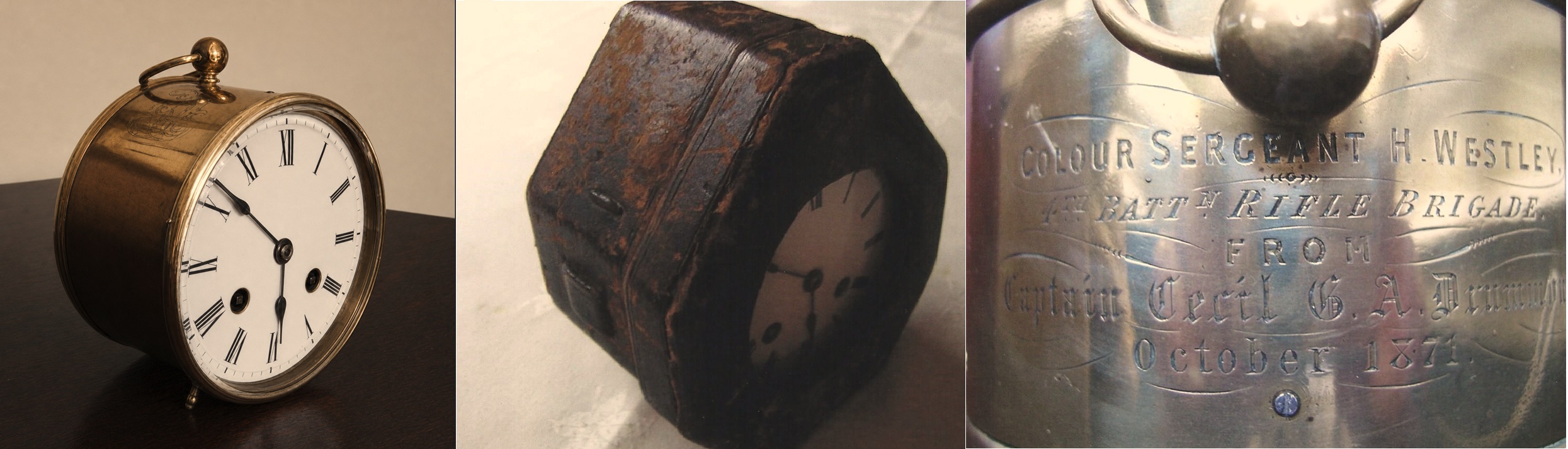
In the wake of the German retreat, in October 1944, Basil was free to leave Wasquehal. He returned home to Sangatte, only to find that “…very few houses were left standing, all I found of mine was some mint pushing up between the bricks. All I saved was 3 rowing silver cups, some Derby china & a valuable clock which has been presented to my father by Captain Cecil Drummond in 1871. These had been in a neighbours secret hole, or hiding place29, when the Germans entered the region. All the people (not many left) bore the severe traces of the war, they had aged the most of them 25 years, as it was the most fought over ground during the war; it never stopped; and they told me they wondered how England was suffering as they saw all the doodle bugs go over their heads.”
With his home gone, Basil headed to Marine’s family in Mayenne. That commune too had also suffered badly, not only from the German occupation, but also the US bombardment prior to D-Day. He stayed in Mayenne for the remainder of the war.
Eventually, in July 1946, Basil’s long and remarkable journey took him back to England to “…find asylum” with his daughter Frances and her family. On the way there he paid a visit to Calais. As he did so, he no doubt reflected upon his arrival there as a 32-year-old in 1900 and the excitement he felt then. Now he found that his business there was “…destroyed completely”. In addition, the Noyen lace factory, for whom he had done work since 1907 was “…utterly destroyed with no hope of reconstruction” and its owner dead.
With his world in France now, literally, in ruins, Basil crossed his beloved Channel for the last time and started “…life afresh” at his daughter’s home at 121 Roundtable Road, Bromley, Kent. It was here that he penned his memoir, which he dated 26th November 1946. Basil continued to design and send lace patterns to France, but due to the restrictions on the movement of currency in place at the time he could not be paid for it.
When he was told that his first great grandchild was on the way, he asked for a length of lace to be sent for the Christening robe. Frances made the gown, incorporating the lace, which still remains in the family and is still used at christenings.
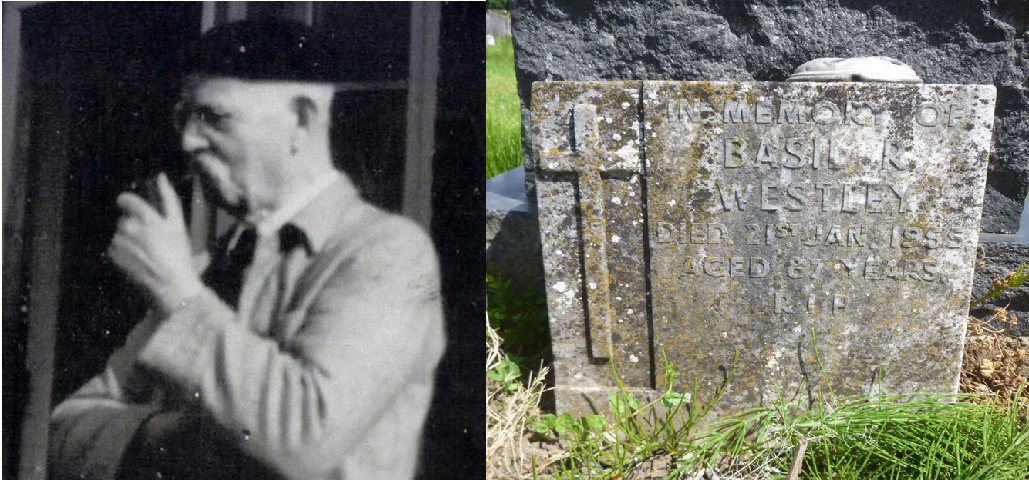
Basil’s extraordinary life… one that followed a colonial army to Ireland and India; one that created the lace that decorated the tables of the world; one that saw, close at hand, men take to the air for the first time; one that fought bravely as a civilian on the front line in two world wars; one overflowing with fortitude and self-belief… a life of ‘being there’… finally came to an end on 21st January 1955 at Norwood House, a local authority home for the elderly. He died on the day after his 87th birthday. Basil was buried in the Hither Green Cemetery, Lewisham four days later. 30
Acknowledgements.
This text is dedicated both to Basil and his fortitude, which can be a lesson to us all, but also to the late Derek and Eileen Hutson, who were so helpful to me during my research.
Whilst individual attibutions are shown in the notes to the text shown below, in general terms I am beholden to the Archives departmentales du Pas-de-Calais, whose excellent on line resources have enabled me to utilise French census details and also birth, marriage and death information for the Calais/Sangatte area, not to mention the divorce and military documents highlighted in the footnotes.
Details of UK Birth, Marriage and Deaths have been secured from both the General Register Office directly, or via www.ancestry.co.uk , www.findmypast.co.uk and also the Northamptonshire Archives, in the case of Basil’s birth and baptism. www.ancestry.co.uk has also been used to provide parish register details for this history. British newspaper content has been derived from either the extensive archive held online at www.findmypast.co.uk, or the Nottingham Local Studies library. The military career of Henry Robinson Westley is outlined in pension documents held at the UK National Archives ref: WO117/24.
Finally, Jean Pierre Duchossy’s family tree, available at Geneanet via en.geneanet.org, has been invaluable in providing details of the Couvelard family history. Thanks too to ‘Anonymous’ for, amazingly quickly, tracking down Basil’s grave memorial and taking a photograph of it, which is now available on the www.findagrave.com website.
Notes.
- Basil’s memoir was shared with me by Eileen and Derek Hutson (Basil’s Grandson), during conversations in August and September 2014. Eileen and Derek very kindly also shared the photographs of the Westley family, and of Henry Robinson Westley’s clock that appear in this history. Eileen also provided other details, not explicit in Basil’s memoir, that I have woven into the text. ↩︎
- Henry Robinson Westley junior – Born: Montreal, Canada, 29th August 1866. Died: Montreal, 4th August 1867, aged 11 months. Henry junior was buried the day after his death in the graveyard of Notre Dame de Montreal. ↩︎
- Mark Harry Westley – Born: Gibraltar, 19th August 1864. Died: Holborn, London, 20th March 1919, aged 54. ↩︎
- Joseph Killackey Westley – Born: (as Joseph Killackey) Ithica, Ionian Isles, Greece, 16th February 1852. Died: Nottingham, 13th March 1921, aged 64. Joseph lived for a time at the home of my Great-Great-Grandfather, John Wesley (Henry’s brother). Mary Feeley had married Joseph’s father (also called Joseph) in Athlone, Westmeath, Ireland on 7th November 1848. Joseph senior, who had served with the 51st regiment in the Crimea, died on the Maltese island of Gozo on 10th January 1857, aged 32. ↩︎
- There were officially 5 ‘wars’ with the Ashanti peoples of the Gold Coast (present day Ghana) between 1823 and 1901, largely caused by opposition to British colonial expansion. The most recent to Basil’s birth being in 1863-1864. ↩︎
- Mary Alice Westley, later Brosch – Born: Huts Brompton, Chatham 11th February 1872. Died: Mapperley, Nottingham 6th April 1954, aged 82. ↩︎
- Basil kept a Crown Derby pot with him even after his later move to France. The pot survived the war after Basil had buried it to keep it safe. ↩︎
- Burton was to become Lord Mayor of Nottingham in 1884. ↩︎
- Basil worked independently for several firms – Thomas Purdy, Regent Street Mills, Mr. Richardson, Regent Street Mills, Mr. Walter Lowe, Harrington Mills – all in Long Eaton, Derbyshire. ↩︎
- Gentis, Catté et compagnie ↩︎
- Caudry – Wikipedia ↩︎
- Marine’s divorce was pronounced in Boulogne on 4th February 1910, and registered by the Maire at Sangatte on 16th July 1910. The divorce was granted on the ground of her husband Antoine’s excessive drunkeness, abuse and abandonment of his family. (Archives departmentales du Pas-de-Calais, ref: Vue 124 and 125/131 nbsp) ↩︎
- Latham was to meet an early end aged 29, not in the skies, but on a hunting trip in Chad. Officially he was gored by a Buffalo, although others suspected foul play. ↩︎
- Lympne is near Hythe on the South Coast of England ↩︎
- Les Baraques ↩︎
- Maurice Arnold de Forest, Count de Bendern (9 January 1879 – 6 October 1968) was an American-born British politician, soldier, aviation pioneer and early motor racing driver. ↩︎
- The 2nd Battalion OLI arrived in France on 14th August. ↩︎
- Translated: ‘Let the music play’. ↩︎
- The siege of Antwerp took place between 28th September and 10th October 1914. ↩︎
- Basil believed that the church of “St. Giovanni” (St. John) was where his parents married in 1863, however he was mistaken. Henry and Mary’s marriage actually appears in the registers of St. Paul’s Anglican Cathedral, Valetta, dated 19th August 1863. The confusion might have arisen because Basil’s mother, Mary, was a Roman Catholic and St. John’s is Valetta’s Roman Catholic Cathedral. ↩︎
- abbottandholder.co.uk/the-camp-in-the-oatfield/ . The paintings are now in the ownership of the Florence Nightingale Museum, London. ↩︎
- Marin enlisted on 28th February 1917 and joined the 43rd Infantry Regiment. He was hospitalised with illness in the Autumn of 1917, returning to the front in February 1918. Marin was wounded during the Battle for the Aisne on 12th June 1918 and hospitalised until September 1918. Info: Military Register entry for Marin Couvelard (Class of 1918, No. 3543 ref: r_9371, vue 57/742 nbsp) held in the Archives departmentales du Pas-de-Calais. ↩︎
- “…my father’s medals and sword, which I did not want to fall into the hands of the Germans”. The sword is still in the family and , at the time of my conversatons with Eileen and Derek in 1914, it was with Derek’s nephew in Australia. ↩︎
- He even encountered some soldiers from “my town” – Nottingham. And, in a “hurried talk” with them he established that the soldiers name “…was Spencer, Bamford Street, Nottingham, another MacIntyre Carlisle”. ↩︎
- “… an invalide” in Basil’s words. ↩︎
- The diary of George Arthur Gregson has been transcribed and is available on-line at www.pratclif.com/calais/en-fr-friendship/gregson/index.htm . ↩︎
- Presumably at Les Attaques as per Gregson’s diary. ↩︎
- F.F.I = French Forces of the Interior, the formal name General de Gaulle gave to resistance fighters in the latter stages of the war. ↩︎
- The ‘secret hole, or hiding place’ was, according to Eileen Hutson, ‘… a large trunk, which Basil buried in the garden. ↩︎
- Grave picture courtesy of ‘Anonymous’ via Find a Grave – Millions of Cemetery Records.
↩︎

